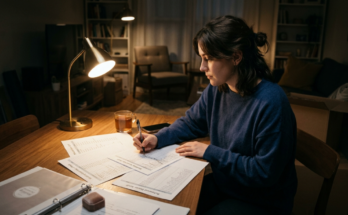
My name is Sophia Taylor. I am twenty-eight years old, and I live in Charleston, South Carolina, a city famous for preserving beautiful old facades while the foundations shift quietly beneath them. My profession has always felt like a mirror of my life: I coordinate restoration projects for historic hotels—buildings wealthy tourists love to photograph but rarely understand. I spend my days repairing hand-carved crown molding, stabilizing centuries-old marble, and filling cracks so perfectly that no one ever knows they were there.
But some cracks cannot be repaired with plaster and polish.
For four years, I had not sat at a dinner table with both my parents in the same room. Not for Christmas, not for Thanksgiving, not even for my birthday. I was the “independent” daughter, the one who had moved away, built a career, and supposedly needed nothing.
So when my parents finally agreed to fly south to visit me, that old ache in my chest turned into frantic hope. I paid for everything without hesitation: their roundtrip tickets, checked bags, airport cars, and a luxury rental car so they would never feel inconvenienced by my schedule.
Then I prepared my townhouse like it was a magazine spread. I bought fresh lilies, heavy linen napkins, and polished the silver until it caught the light. I spent sixteen hours slow-cooking the pot roast my mother used to make during the rare years when our family felt whole. I hand-whisked the lemon meringue pie my father always said no bakery could ever get right.
Every night for a week, I set the table for four.
I lit the tapered candles and watched their amber glow tremble over untouched plates. And every night, those candles burned down into lifeless pools of wax while my phone stayed as silent as a tomb.
They were only thirty minutes away.
They were staying at my sister Hannah’s house, surrounded by toddlers, toys, and the kind of chaos my parents always seemed willing to forgive. Through the bright little portal of social media, I watched their visit unfold without me. Hannah posted photo after photo: my parents laughing on her porch, my father holding her children, my mother sipping expensive wine—wine I had probably funded—acting as if this were a family retreat I had simply failed to attend.
On their final day in Charleston, while the roast sat congealing on the counter and four untouched place settings stared back at me, my phone finally buzzed.
A text from my mother.
“Maybe next time, sweetie. The kids just couldn’t let us go.”
I stared at those words until the room seemed to tilt.
Maybe next time.
It was not the loud, jagged break of a heart. It was quieter than that. Deeper. Like a foundation shifting beneath a house no one had bothered to inspect.
I didn’t cry. I didn’t scream. I simply opened my banking app and began looking at four years of digital receipts—the price of a love I had been trying to buy.
The first night they chose Hannah’s house over mine, I had lied to myself with the skill of someone who had been practicing for years.
They’re tired from the flight.
Hannah’s children are small.
They need the grandparents more than I do.
I wrapped the roast in foil, blew out the candles, and went to bed pretending the hollow ache in my stomach was only hunger.
The next morning, I sent a cheerful text with a smiling emoji, a little digital mask over my desperation.
“Good morning. I can make brunch here whenever you’re ready. No rush.”
Four hours passed.
At noon, Hannah posted from a waterfront restaurant—the kind with a three-month waiting list. My parents were beaming. The caption read: “Best surprise visit ever. The kids are spoiled rotten this week.”
My mother commented: “Wouldn’t miss it for the world.”
The irony pressed against my ribs like a weight. She had missed me for four years. But a lunch with Hannah’s toddlers? That, apparently, she wouldn’t miss for the world.
At three that afternoon, I called my father. Behind him, I heard shrieking children, clinking plates, and Hannah’s sharp laugh.
“Hey, Soph,” he said, casual as if we spoke every day. “Everything okay?”
“I was checking on dinner,” I said, trying to keep my voice steady. “I’ve got the table set again.”
There was a pause—the kind that comes before a practiced excuse.
“Tonight might be tricky, sweetheart. Hannah’s place is just more convenient with the little ones. And honestly, your mother doesn’t want to keep packing up and driving back and forth.”
“Packing up?” My fingers tightened around the phone. “Dad, I paid for a rental car so you wouldn’t have to worry about convenience. It’s a thirty-minute drive.”
He sighed, as if my existence had become an inconvenience.
“We’re in the same city, Sophia. We’re seeing you… generally. Don’t make this a thing.”
Generally.
To them, I was not the main story. I was a footnote. Hannah was the family. I was the account that kept the family comfortable.
I hung up and walked to my office. I didn’t open restoration schedules or blueprints. I opened my financial history.
For four years, while I restored old hotels, I had also been secretly restoring my parents’ lives.
Twelve hundred dollars a month toward their mortgage after my father’s consulting firm collapsed. My mother’s expensive heart prescriptions when their insurance “got complicated.” Hannah’s emergency childcare—once, then twice, then so often it became an invisible salary.
I built a spreadsheet.
The total made my blood go cold.
$62,840.
That number didn’t include their flights. It didn’t include the rental car. It didn’t include the groceries rotting in my refrigerator. I had been the silent benefactor of a family that treated me like a distant creditor.
Then a new email alert appeared.
A charge from the rental car agency.
An extension I had not authorized.
A moment later, the details loaded. Hannah had used my stored credit card information from a shared account to book a luxury beach rental for “one last family hurrah” the next day—the same day my parents were supposedly finally going to see me.
On the fourth day, my best friend Olivia Monroe showed up at my door with takeout and a bottle of bourbon. She took one look at the set table—the candles burned halfway down beside untouched plates—and her expression shifted from pity to cold, focused rage.
“Sophia,” she said quietly, “this isn’t a dinner party anymore. This looks like a memorial service.”
I tried to laugh. It came out as a broken sob.
We sat at the table and ate the takeout because someone deserved to occupy the space I had created. Halfway through dinner, my phone pinged. The family group chat lit up with a photo of my parents at a Charleston RiverDogs game. My mother wore a team hoodie. My father held a giant pretzel.
Hannah’s caption read: “Spontaneous family night!”
Olivia reached across the table and turned my phone face down.
“You flew them here,” she said. “You’ve funded their mortgage, their medicine, and their vanity for years. And now you’re sitting here watching them spend your money and your time at your sister’s house.”
“I don’t want to be cruel,” I whispered.
“Boundaries aren’t cruelty, Soph,” she said. “They only feel cruel to people who benefited from you having none. Stop being the bank and start being the architect.”
That night, I looked in the hallway mirror and saw every version of myself I had tried to bury.
The twelve-year-old girl in a party dress, waiting alone on the school steps after an awards ceremony because my parents forgot to pick me up. Hannah’s dance rehearsal had run late.
The sixteen-year-old pretending not to care when my father missed her debate final because Hannah was having “a rough day.”
The grown woman setting a table for people who had never intended to sit there.
I had been auditioning for the role of daughter my entire life, while the only part they ever cast me in was donor.
I went back to the spreadsheet and created a second tab: Active Cancellations.
Mortgage supplement.
Prescription account.
Roadside assistance.
Streaming bundles.
Childcare payments for Hannah.
At the bottom, I typed one sentence in bold:
Stop funding people who do not show up for you.
On the fifth day, my mother called. She sounded bright, airy, completely untouched by the week I had been living through.
“Sweetie, we might not make it tonight. Hannah promised the kids a movie night, and your father is exhausted from the sun.”
I was standing in the lobby of a hotel I was restoring, staring at a cracked marble column that had survived because someone decided it was worth saving.
“Mom,” I said, my voice steady. “You leave in forty-eight hours.”
“I know, honey. It’s just been so busy. Maybe you can come to Hannah’s tomorrow morning before we head to the airport?”
The old Sophia would have said yes. She would have taken the crumbs and called it a meal.
But the new Sophia—the architect—finally saw the flaw in the structure.
“Why didn’t you stay with me?” I asked.
“Oh, Sophia, don’t start,” she snapped. “Hannah has more space. The children needed us. You’re so independent. We knew you’d understand.”
Independent.
The family code word for expendable.
“I paid for the flights,” I said. “I bought food for a week. I asked you every day to come here.”
“And we appreciate that,” she said, Hannah’s voice echoing faintly in the background. “But you’re acting like we abandoned you. We’re thirty minutes away.”
“Thirty minutes you refused to travel.”
The line went still.
Then I heard Hannah whisper, “Just hang up, Mom. She’s being dramatic again.”
My mother did not defend me.
She simply said, “Talk later,” and disconnected.
That evening, I did not cook. I did not light candles. I sat at my desk and wrote an email that felt like a declaration of independence.
Subject: Termination of Financial Support and Travel Arrangements
Mom and Dad,
I funded this trip because I believed, perhaps foolishly, that you wanted to be my parents. Instead, you treated me like a travel agent and an open wallet.
I respect your choice to prioritize Hannah’s household. Now I am making a few choices of my own.
Effective immediately, I am ending all monthly financial support. This includes the mortgage supplement, the prescription account, and childcare payments for Hannah’s children. I have attached a record of the $62,840 I have provided since 2022 so there will be no confusion.
I have also cancelled the rental car extension and the beach house deposit Hannah attempted to charge to my account. Your return flights remain active because I do not break my word, even when you have broken yours.
From this moment forward, you will manage your own expenses.
I attached a photo of my dining table from the first night of their visit.
Look at the empty chairs. That is what you chose.
Then I hit Send.
The fallout was instant.
My phone transformed into a frantic, vibrating creature. At 11:42 p.m., my father texted: “What is this? Is this a joke?”
At 11:44, my mother called.
At 11:45, Hannah called four times in a row.
I turned the phone face down on my nightstand and slept the first dreamless sleep I had known in years.
By eight the next morning, I had twelve missed calls and a voicemail from my father that began with forced calm and ended in a snarl. I answered my mother’s thirteenth call while drinking coffee.
“Sophia!” she shrieked. “You need to undo this right now! Your father is panicking. The mortgage is due on the first!”
“Good morning, Mom,” I said. “Did you read the spreadsheet?”
“I don’t care about your little list. You’re punishing us because we stayed where it was practical? We raised you better than this!”
“You raised me to be a resource,” I replied. “I am teaching myself to be a person. There’s a difference.”
“You don’t have children,” she snapped. “You don’t understand real family obligations!”
“My money was real enough,” I said. “But apparently I wasn’t. You were thirty minutes away for six days. You didn’t come once. Not for dinner. Not for the daughter who paid for your seat on that plane.”
Then my father’s voice cut in.
“Can we discuss this when we come over today?”
I looked at my clean, empty table.
“Today?” I asked. “No. I’m not available today.”
“Sophia Taylor!” my mother gasped. “We flew all this way!”
“And I paid for it,” I said. “The rental car is covered through noon. After that, the bill goes to your card. I’m done discussing money. If you want a relationship with me, it starts with an apology, not a transfer request.”
I hung up.
Five minutes later, Hannah texted: “Mom is sobbing. I hope your ego was worth breaking the family.”
I didn’t answer. I blocked the group chat and went to work on a building that actually appreciated being saved.
That final evening, I was at a jazz club with Olivia when my phone, temporarily unblocked for emergencies, showed a photo from my father.
It was my front door.
8:15 p.m.
“We’re here. Open up.”
I stared at the image.
The old Sophia would have rushed home, apologized for the “misunderstanding,” and reheated the week-old roast.
The new Sophia looked at her drink, then at her friend, and typed:
“I told you I was unavailable. Safe flight tomorrow.”
The next morning, they flew home without ever stepping inside my house.
That sentence used to sound like failure.
Now it sounds like evidence.
The weeks that followed were ugly. My mother sent long emails about the sanctity of motherhood. Hannah posted quotes about “people who forget where they came from.” My father left stiff, wounded voicemails.
But the checks stopped.
The mortgage was no longer supplemented. My mother moved her prescriptions to a generic provider she had once called “too complicated.” My father took on extra consulting work. Hannah cancelled the beach rental and her children’s premium after-school programs.
They were not destroyed.
They were simply forced to manage the lives they had been outsourcing to me.
A month later, a handwritten letter arrived from my father. For the first time, it was not a demand. It was not a guilt trip. It was an admission.
He wrote that he had used my independence as an excuse to ignore my needs.
“I thought because you didn’t ask for much, you didn’t need anything,” he wrote. “I was wrong.”
My mother’s apology came two months later. It was shaky, imperfect, and fragile, but for the first time in years, it sounded honest.
We are not a perfect family now. We are a renovated one.
The cracks are still visible, but the foundation is finally level.
When my parents visited Charleston again three months ago, they paid for their own flights. They stayed in a hotel downtown. And when they came to my house for dinner, I set the table for three.
Not four.
Hannah was not invited.
This was not a family obligation. This was a daughter and her parents.
My mother brought flowers. My father brought lemon pie and admitted, for the first time, that the bakery’s version was not as good as mine. We sat. We ate. We spoke about the future instead of bills.
I learned that a boundary is not a declaration of war. It is an invitation to be loved correctly.
I stopped setting the table for people who treated my presence as optional.
And in doing so, I finally found a home where I was not the bank.
I was the guest of honor.