Chapter 1: The Phantom Theft
Every aristocratic family possesses a distinct, intoxicating perfume. It is not something you can purchase at a boutique in Paris. It is a bespoke blend of inherited arrogance, desperate sycophancy, and the cold, metallic scent of newly minted money. That was the air I was forced to breathe inside the grand ballroom of the
Sterling Estate
, a sprawling, billion-dollar vineyard and manor nestled in the rolling hills of Napa Valley.
Tonight was the annual Autumn Gala. Two hundred relatives—uncles, second cousins, and hangers-on who operated like a hive mind of judgment—were gathered beneath three massive, cascading crystal chandeliers. Waiters in white tuxedos circulated with trays of vintage champagne, the bubbles catching the light like liquid diamonds.
I stood in the corner, nursing a glass of sparkling water. I was twenty-five, a recent graduate of Yale Law School, graduating top of my class. Yet, in this room, my brilliant legal mind was entirely irrelevant. To them, I was simply Elara: the quiet, disappointing daughter of the great
Marcus Sterling
, and the perpetual target of my stepmother,
Celeste
Celeste was a woman composed entirely of high-end fillers and theatrical malice. She had married my father ten years ago, immediately launching a covert, psychological war to erase my existence and secure the Sterling empire for herself. My father, blinded by her youth and his own colossal ego, allowed it. He demanded submission. I gave him silence. He mistook my silence for weakness.
The string quartet was playing a lively Vivaldi piece when the music was suddenly, violently interrupted by a high-pitched shriek.
“My bracelet! It’s gone!”
The ballroom fell into a hushed, breathless stillness. Celeste was standing near the grand staircase, pressing her trembling, manicured fingers to her throat. Her eyes were wide, and fake tears already gleamed brilliantly under the chandeliers.
“The Cartier diamond cuff,” Celeste gasped, her voice carrying flawlessly across the room. “I took it off in the powder room to wash my hands. I went back, and it’s vanished!”
Murmurs of shock rippled through the sea of relatives. My father, Marcus, materialized beside her in his bespoke black tuxedo, his face hardening into a mask of patriarchal fury.
“Nobody leaves,” my father barked, his voice echoing off the marble walls. “Who was in the east corridor?”
Celeste’s eyes darted through the crowd, deliberately bypassing the wealthy aunts and cousins, until they locked squarely onto me. A cruel, triumphant spark ignited in her gaze.
“I saw Elara walking out of the east corridor just ten minutes ago,” Celeste cried, pointing a trembling finger in my direction. “She was the only one! She came back from that liberal law school thinking she was better than us, but she’s always been jealous of what we have!”
The hive mind turned. Two hundred pairs of eyes shifted toward me. Whispers erupted, sharp and venomous.
I knew there was something wrong with her.
Such a disgrace to Marcus.
“I haven’t been in the east corridor all night, Celeste,” I said, my voice steady, though my heart began to hammer against my ribs. “I’ve been standing right here.”
My father didn’t ask for my side of the story. He didn’t ask for proof. He marched across the ballroom, the crowd parting for him like the Red Sea. He stopped directly in front of me, his massive frame blocking out the light. He was shaking with a practiced, theatrical rage.
“You will not embarrass me in front of my family,” he hissed, his breath smelling of expensive scotch. “Give it back.”
“I don’t have it,” I replied, holding my head high.
The slap cracked louder than the clinking champagne glasses.
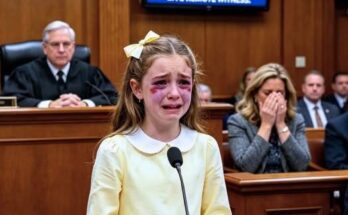
It was a violent, open-handed strike that whipped my head to the side. The sheer force of it snapped my neck back, my vision exploding into a constellation of white, jagged stars. A collective gasp sucked the remaining oxygen from the room. For one terrible second, two hundred relatives stopped breathing.
The side of my face burned violently, the shape of his heavy hand already blossoming into a deep, throbbing bruise. I tasted the sharp, metallic tang of copper where my teeth had cut the inside of my cheek.
“Give it back, and get on your knees and apologize to your mother,” my father roared, pointing at the marble floor.
Laughter, soft and sickening, rippled through the crowd like a knife passed from hand to hand. They were enjoying the execution.
I slowly turned my head back to look at him. I didn’t reach up to touch my face. I didn’t flinch. I simply stared at him with eyes as cold as a morgue slab.
Suddenly, a voice broke the tension. “Marcus! Hold on!”
, my father’s red-faced brother, came jogging out of the west corridor hallway, holding up a glittering band of diamonds. “I found it! It had slipped off and fallen behind the pedestal sink in the guest bathroom! Celeste, you must have dropped it!”
The silence that followed swallowed the ballroom whole. Celeste’s face froze, her theatrical tears evaporating instantly. The crowd shifted uncomfortably, looking down at their expensive shoes.
My father looked at the bracelet, then back at me. He didn’t apologize. He didn’t look horrified by his own violence. He casually adjusted his diamond cufflinks, letting out a heavy sigh of annoyance.
“Well,” my father muttered, his voice devoid of a single shred of remorse. “You shouldn’t have been acting so suspicious, Elara. Consider it a lesson in posture.”
He turned his back on me. The string quartet, entirely cowardly, immediately struck up a waltz to cover the thick, agonizing tension.
I stood alone in the corner. I reached up, my fingertips lightly brushing the hot, swollen skin of my cheek. Then, very slowly, I tilted my head back. My eyes traced the ornate crown molding of the ceiling until they found the small, black, high-definition security camera nestled in the corner. Its red recording light blinked steadily.
I had waited six agonizing months for my father to make a fatal mistake. And as the dull, throbbing pain radiated through my jaw, a dark, terrifying smile curved onto my lips. He hadn’t just slapped me. He had just handed me the final, undeniable piece of evidence I needed to bury him alive.
Chapter 2: The Reversionary Clause
“Careful, little girl. You own nothing here,” Celeste hissed, sidling up beside me as I turned toward the grand exit. She swirled the champagne in her glass, her eyes glittering with toxic satisfaction. “You can take your law degree and walk back to whatever tiny apartment you rent. This empire is mine.”
I looked at her, truly looked at her. I saw the desperate, hollow core beneath the silk and fillers. I almost smiled.
“Enjoy the wine, Celeste,” I said, my voice completely flat. “It has a very short shelf life.”
I walked away, my heels clicking methodically against the imported marble. I pushed open the heavy, carved oak doors of the ballroom. The crisp, cool night air of the valley hit my burning face like a physical blow. Behind me, I could hear my father shouting over the music.
“Elara! If you walk out those doors, do not bother coming back!” he barked.
His voice, which had once held the power to terrify me, now sounded infinitely small, like the barking of a dog chained behind a fence. I didn’t turn around. I didn’t break my stride.
I walked down the sweeping stone steps and crossed the circular driveway to my modest sedan. I unlocked the door, slid into the cold leather seat, and locked it behind me. The silence inside the car was absolute.
I reached into the glove compartment and pulled out a small, instant ice pack. I cracked it, feeling the chemicals freeze, and pressed it against my cheek. The pain was sharp, but it grounded me. It reminded me of the reality of the man I was dealing with.
I pulled my cell phone from my clutch. My thumb hovered over a contact saved simply as
Mr. Vance
To my father, my three years at law school were a joke, a delay of my inevitable failure. What he didn’t know was that six months ago, during my final semester, I received a secure, confidential package from a man named Arthur Vance, a senior partner at a formidable trust-and-estate firm in New York.
Mr. Vance had been my late grandmother’s personal attorney.
My grandmother,
Eleanor Sterling
, was the true architect of the vineyard empire. When she died five years ago, my father assumed total control, claiming she had left everything to him.
The package from Mr. Vance contained the truth.
My father hadn’t inherited the empire. He had stolen it. He had forged signatures, established fraudulent shell companies, and coerced a corrupt local judge to bypass Eleanor’s true will. The genuine document, which Mr. Vance had kept hidden until I was legally of age and possessed the education to understand it, held a lethal secret.
The entire estate—the mansion, the vineyards, the billion-dollar corporate holdings, the trust accounts—was left in a reversionary trust. It belonged entirely to me. My father was legally meant to be nothing more than a temporary manager with a modest stipend.
For the past six months, I hadn’t just been studying for the bar exam. I had been working with a team of elite forensic accountants and federal investigators, quietly untangling the labyrinth of my father’s embezzlement. We had documented every stolen dollar, every illegal wire transfer to Celeste’s offshore accounts.
We had the financial proof. But Mr. Vance warned me that my father was deeply connected. He had judges in his pocket. If I filed the claim, my father would drag it through the courts for a decade, bleeding the estate dry to pay his defense lawyers.
“We need leverage, Elara,”
Mr. Vance had told me over a secure line.
“We need a criminal act. Something so undeniable, so public, that the local authorities have no choice but to arrest him on the spot, freezing his assets instantly.”
I pressed the call button. Mr. Vance answered on the first ring.
“Elara? It is midnight on the West Coast. Are you alright?”
“I’m perfectly fine, Mr. Vance,” I said, my voice steady, icy, and completely devoid of emotion. “They took the bait. My father committed felony assault against me tonight.”
I heard a sharp intake of breath on the other end of the line. “Are you injured? Do we need to send an ambulance?”
“A bruised cheek and a cut lip. Nothing that won’t heal,” I replied, staring out the windshield at the massive silhouette of the mansion. “But he struck me on camera. In the main ballroom. In front of two hundred witnesses. The footage is currently uploading to my secure cloud server.”
There was a pause, followed by the sound of Mr. Vance typing rapidly on a keyboard.
“We have the leverage,” Mr. Vance said, his voice dropping into a register of sheer, professional lethality. “The embezzlement audit is finalized. The federal judge signed the reversionary seizure orders yesterday afternoon, pending your activation.”
“Activate them,” I ordered. “Execute the trust reversion. I want the asset seizure to begin at dawn. Strip him to the bone.”
“Consider it done, Ms. Sterling,” he replied.
I hung up the phone. I leaned my head back against the headrest, looking through the tinted windows at the brightly lit ballroom.
Inside, the band was playing. Celeste was laughing, swirling her expensive vintage champagne, twirling in her designer gown. My father was holding court, smoking a Cuban cigar, acting like the king of the world.
They were completely oblivious to the terrifying reality hurtling toward them. The crystal glass in Celeste’s hand, the wine she was drinking, the clothes on her back, and the very Italian marble floor she was dancing on—none of it legally belonged to them anymore.
I didn’t drive back to my apartment. I drove to the bottom of the estate’s two-mile-long private driveway, pulled off onto the grassy shoulder, and reclined my seat.
As the sky began to turn a bruised, violent purple in the east, signaling the arrival of dawn, I watched my rearview mirror. From the misty highway, a silent, terrifying convoy materialized. Six black, unmarked federal SUVs and four local police cruisers turned onto the driveway, their headlights cutting through the morning fog, rolling past my parked car, heading straight for the mansion’s front doors.
Chapter 3: The Asset Seizure
The hangover of the wealthy is a delicate thing. It requires absolute silence, blackout curtains, and the knowledge that the world will wait for you to wake up.
At exactly 7:00 a.m., that illusion was shattered.
The heavy, custom-carved mahogany doors of the Sterling mansion were not knocked upon; they were practically battered off their hinges by the heavy fists of United States Federal Marshals.
I stood at the edge of the circular driveway, sipping coffee from a thermos, watching the operation unfold with surgical precision. The front doors burst open. Armed marshals in tactical vests swept into the grand foyer, followed closely by a swarm of forensic accountants in sharp suits, carrying briefcases and stacks of legal documents.
A chaotic cacophony of shouts, breaking glass, and panicked voices erupted from inside the house. Relatives who had crashed in the guest wing stumbled out of their rooms in silk pajamas, screaming as officers ordered them to remain where they were.
Suddenly, my father stormed down the grand, sweeping staircase.
He was wearing a burgundy silk robe, his hair disheveled, his face mottled a violent, suffocating purple with indignant rage. He looked like an enraged bull whose arena had just been invaded.
“What in the absolute hell is the meaning of this?!” my father roared, his voice cracking with fury. He marched straight toward the lead marshal, a tall, imposing man with a stern, immovable face. “I am Marcus Sterling! I am a major political donor in this state! You have exactly three seconds to get out of my house before I call the governor and have your badge stripped!”
The lead marshal didn’t flinch. He didn’t look intimidated. He looked at my father with the cold, detached disgust one reserves for a petty thief.
“You can try to call whoever you like, Mr. Sterling,” the marshal said, his voice flat. He stepped forward and shoved a thick, heavily stamped stack of court documents directly into my father’s chest, forcing him to take them. “But I doubt the governor takes calls from federal suspects. This property, along with all subsidiary corporate assets, bank accounts, and holdings, has been formally seized under a reversionary trust clause authorized by a federal judge.”
My father stumbled back a step, the heavy paperwork feeling like a lead weight in his hands. “Seized? Trust clause? What are you talking about? I own this estate!”
“No, sir,” the marshal corrected sharply. “You do not. You are currently trespassing on private property owned by the sole legal heir of Eleanor Sterling.”
A piercing, hysterical scream ripped through the foyer.
Celeste came rushing down the stairs, her expensive hair extensions tangled, her face shiny with expensive night creams. She was pointing a trembling finger at an auditor who was calmly placing a bright red seizure tag on a 17th-century Renaissance painting hanging in the hallway.
“Don’t touch that!” Celeste shrieked, batting at the auditor’s hands. “That is mine! Marcus bought that for my anniversary! Get out of my house!”
“Ma’am, step back,” a police officer warned, placing a hand on his duty belt.
“Marcus, do something!” Celeste sobbed, grabbing my father’s arm. “They’re putting tags on my jewelry boxes upstairs! They said they’re taking the cars!”
My father ignored her. His eyes were glued to the first page of the legal documents. His arrogant, furious expression began to slip, replaced by a creeping, paralyzing horror. He read the convoluted legal jargon, tracing the forensic accounting summary that detailed exactly how he had forged his mother’s will.
And then, his eyes dropped to the bottom of the page, scanning the plaintiff’s name. The name of the true legal owner.
His breath hitched. The color drained from his face so fast he looked like a corpse. The silk robe suddenly looked far too large for him.
“Elara,” he whispered, the heavy paper trembling violently in his hands.
“This is a mistake,” my father muttered, his voice dropping to a frantic, manic mumble. He reached into his robe pocket and pulled out his cell phone. “I just need to call my attorneys. They’ll shut this down. I’ll sue the federal government.”
He dialed his elite, thousand-dollar-an-hour defense attorney. He pressed the phone to his ear.
Silence.
He pulled the phone away, staring at the screen. “No service? How is there no service?”
“Your personal accounts have been frozen, Mr. Sterling,” the lead marshal explained calmly. “Your cell phone plan was tied to the corporate account, which is now under the control of the new CEO. It was disconnected at 6:00 a.m.”
Panic, raw and ugly, finally broke through my father’s facade. He was cut off. He was broke. He was trapped in a house that belonged to the daughter he had abused.
Just as my father looked up from his dead phone, the massive front doors of the mansion were pushed wide open.
The morning sunlight poured into the foyer, casting a long, sharp shadow across the marble floor.
I walked into the house. I was no longer the quiet, shrinking girl from the ballroom. I was dressed immaculately in a sharp, tailored navy blue professional suit. My hair was pulled back tightly. The dark, purple bruise on my cheek was clearly visible—I had applied no makeup to cover it. I wore it like a badge of honor, a testament to the cost of my victory.
I stepped over the threshold, not as an outcast, but as the undisputed, absolute master of the house.
Chapter 4: The Execution
My heels clicked methodically against the imported marble, a slow, rhythmic drumbeat of impending doom. The foyer, previously echoing with the chaotic shouts of the raid, fell into a stunned, breathless silence as the relatives—who had laughed at me the night before—watched me walk past them. They pressed themselves against the walls, their eyes wide with fear.
My father looked up. When he saw me, the last remnants of his patriarchal superiority evaporated. He lunged toward me, his arrogance entirely replaced by a frantic, pathetic desperation.
“Elara!” he cried, holding his hands up in a placating gesture. “Elara, please! What is this? Have you lost your mind? You’re confused! You can’t do this to your own family!”
I stopped walking, positioning myself exactly three feet from him—just out of his physical reach.
“I am not confused, Marcus,” I said, my voice echoing coldly through the cavernous foyer. I refused to call him Father. That title had expired the moment his hand struck my face.
“This is a prank, right? A misunderstanding over the trust!” he pleaded, sweat beading on his forehead. “Tell these men to leave. We can fix this. I’ll give you a position on the board. I’ll buy you a house!”
“You have no houses to buy,” I stated, my eyes locking onto his terrified gaze. “You told me to kneel last night. You hit me over a piece of jewelry Celeste misplaced. But Grandmother’s true will was quite clear. My inheritance was legally locked in a reversionary state until I possessed the education and the evidence to prove you were embezzling from the corporate accounts.”
I paused, letting the silence stretch, letting the gravity of his sins crush him.
“The forensic audit is complete, Marcus,” I whispered. “I know about the shell companies in the Caymans. I know about the forged signature on the 2018 estate tax returns. You didn’t build this empire. You parasited it. And the host has finally woken up.”
Celeste, realizing the absolute reality of her impending poverty, dropped to her knees on the marble floor. The theatrical tears from the night before were replaced by ugly, snot-nosed sobbing.
“Elara, please!” Celeste wailed, crawling toward me, her hands reaching for the hem of my suit pants. “I didn’t know! He lied to me! Please don’t take my jewelry! Please don’t throw me out on the street!”
I stepped back, looking down at her with pure, clinical apathy. “Get off my floor, Celeste. You have exactly thirty minutes to pack a single suitcase of personal clothing. The designer gowns, the jewelry, the bags—they were purchased with stolen corporate funds. They belong to the estate. If you attempt to steal anything, I will have you strip-searched before you cross the property line.”
My father’s face contorted. The desperation vanished, replaced by the violent, abusive rage I knew so well. He took a menacing step toward me, raising his hand, forgetting the armed men standing just feet away.
“You ungrateful little bitch!” he roared. “I brought you into this world! I’ll kill you!”
Before he could swing, two police officers lunged forward, grabbing his arms and violently twisting them behind his back. My father grunted in pain, struggling against their grip, but he was no match for them.
I didn’t flinch. I reached into my briefcase and pulled out a high-definition tablet. I turned it on and handed it to the lead police officer.
“Officers,” I said clearly, my voice carrying to every corner of the foyer.
On the screen, the crystal-clear, 4K security footage from the ballroom played on a loop. It showed my father towering over me. It showed the violent, open-handed slap. It showed my head snapping back. It captured the audio of him demanding I kneel.
The lead officer watched the video, his jaw tightening in disgust. He looked up at my father.
“I am the legal owner of this property,” I stated firmly, pointing to the bruise on my face. “I am pressing formal, criminal charges for assault and battery. Furthermore, I want him removed from my property immediately.”
“Marcus Sterling,” the officer growled, pulling a pair of heavy steel handcuffs from his belt. “You are under arrest for assault and battery. Further federal charges for corporate embezzlement are pending. You have the right to remain silent.”
“No! No, you can’t do this to me! I am Marcus Sterling!” my father screamed, fighting against the officers like a wild animal. Tears of genuine terror streamed down his face.
The cold steel handcuffs snapped violently around his wrists, the
click-click-click
of the ratchets sealing his fate.
“Elara!” he shrieked as the officers began to physically drag him toward the front doors. His expensive silk slippers dragged uselessly across the marble. “Elara, don’t do this! I’m your father! Elara!”
I stood perfectly still. My heart rate was slow and steady. I watched the man who had terrorized me my entire life be dragged out of his own front door, crying and screaming, stripped of his dignity, his wealth, and his freedom.
As the doors slammed shut behind him, cutting off his pathetic wails, I took a deep breath. The air inside the mansion suddenly felt lighter, cleaner. The heavy, suffocating shadow he had cast over my entire existence evaporated into thin air. I turned to face the terrified relatives huddled against the walls.
“You have one hour to vacate my house,” I said.
Chapter 5: The Corporate Exorcism
The speed at which power shifts in the modern world is terrifying. It doesn’t take armies or sieges; it takes a signature, a forensic audit, and the brutal, unforgiving wheels of the justice system.
Three months later, the contrast in our lives was nothing short of staggering.
My father was no longer wearing bespoke Italian suits. He was wearing a stiff, wrinkled orange jumpsuit in the maximum-security wing of the county jail. Denied bail entirely due to the federal freeze on all his assets, he was currently relying on an overworked, underpaid public defender. He was facing a decade in federal prison for massive corporate fraud, tax evasion, and the battery charge I had leveled against him.
Celeste’s fate was equally poetic. Abandoned entirely by the high-society sycophants who had drank her champagne and laughed at my humiliation, she was destitute. Without my father’s stolen money, she possessed no actual skills. She was last seen by a private investigator pawning a fake designer handbag—which she thought was real—just to pay for another week at a dingy, neon-lit motel on the industrial outskirts of the city.
The hive mind of relatives, the aunts and uncles who had stood by and watched me bleed, had vanished like cockroaches under a floodlight. Stripped of their stipends and access to the estate, they were forced into a terrifying reality: they had to get jobs.
Across town, entirely removed from their squalor, sunlight poured through the massive, floor-to-ceiling windows of the Sterling Vineyards executive boardroom.
I sat at the head of the long, polished mahogany table. I was wearing a sharp, charcoal-gray blazer. The dark, ugly bruise on my cheek had completely healed weeks ago. The swelling was gone, the purple had faded to yellow, and now, my skin was flawless. It was a physical manifestation of my internal reality; the trauma had marked me, but it had not broken me, and it had finally faded away.
I looked down the length of the table. Seated before me were the board of directors—twelve older men in expensive suits. For years, these men had completely ignored me, treating me like Marcus’s irrelevant offspring.
Now, they looked back at me with profound, unshakeable respect. Some of it was driven by fear—they had seen what I did to my own father—but most of it was driven by the results.
In ninety days, I had surgically dismantled the corrupt infrastructure my father had built. I fired the sycophants, severed ties with the corrupt politicians he had bribed, and restructured the supply chain. I applied the brilliant legal mind my father had mocked to streamline our contracts. Profits were already up fourteen percent.
The ghost of my father’s abuse, his toxic patriarchy, and his colossal ego had been completely exorcised from the building.
“The acquisition of the southern valley acreage is finalized,” I stated, closing the leather-bound portfolio in front of me. “We break ground on the new processing facility next month. Thank you, gentlemen. That concludes today’s meeting.”
The board members stood up in unison, a chorus of respectful murmurs echoing in the room. “Brilliant work, Ms. Sterling.” “Thank you, Elara.”
I watched them file out, feeling a deep, solid peace settling into my bones. The years of seeking validation from monsters were entirely behind me. I didn’t need a father’s love. I had my own absolute, undeniable worth.
As the last board member exited, my executive assistant, a sharp young woman named Sarah, stepped into the room. She was holding a silver tray. Resting on the tray was a single, heavily stamped envelope originating from the county correctional facility.
“This arrived in the personal mail, Ms. Sterling,” Sarah said gently, knowing exactly who it was from. “Would you like me to return it to sender?”
I looked at the cheap, standard-issue envelope. My father’s handwriting, usually bold and arrogant, was shaky and small in the return address corner.
“No, Sarah,” I said, reaching out and picking up the letter. “I’ll take care of it.”
Chapter 6: The Confetti of a Tyrant
One year later.
The Napa Valley autumn air was crisp, carrying the rich, earthy scent of crushed grapes and damp soil. I was standing on the expansive stone balcony of the estate’s master suite—the room that used to belong to my father, now completely renovated and stripped of his dark, heavy aesthetic.
I leaned against the stone railing, looking out over the sprawling, meticulously manicured vineyards. The vines were heavy with fruit, ready for the harvest. They belonged to me. Every root, every leaf, every drop of wine they produced was under my protection and my control.
In my right hand, I held a crystal glass of our finest vintage, a deep, ruby-red cabernet. In my left hand, I held the unopened letter from the county jail.
It had been sitting in my desk drawer for nine months.
I looked down at the cheap paper. I could imagine the contents. I knew my father. It would be a manipulative cocktail of begging, guilt-tripping, and pathetic attempts to invoke the “family bond” he had weaponized against me for two decades. He would ask for a lawyer. He would ask for a character reference for his upcoming sentencing hearing. He would ask for mercy.
I ran my thumb over the edge of the envelope, remembering the sudden, violent sting of his hand against my face in the ballroom.
But as I stood there in the quiet evening, I realized something profound. I didn’t feel a pang of trauma. I didn’t feel the burning heat of anger or the desperate, hollow need for an apology. I didn’t want him to suffer, nor did I want him to find peace.
I felt absolute, untouchable apathy. He was simply a man in an orange jumpsuit, entirely irrelevant to the spectacular orbit of my existence.
I turned away from the railing and walked over to the heavy-duty, cross-cut paper shredder I kept in the corner of my home office, just inside the balcony doors.
I didn’t open the envelope. I didn’t read a single word of his pathetic begging.
With a calm, steady hand, I fed the sealed letter into the top slot of the machine. The shredder whirred to life with an aggressive, mechanical growl. I listened to his desperate words, his manipulations, and his ghost being violently sliced into thousands of meaningless, illegible pieces of confetti.
The machine stopped. The silence returned, sweeter than before.
I walked back out onto the balcony, the cool night breeze lifting my hair. I took a slow, deep sip of my wine, tasting the complex notes of dark cherry and oak.
I looked up at the vast canopy of stars stretching over the valley. A deep, genuine smile spread across my face.
My father had slapped me in front of two hundred people. He had demanded that I get on my knees and bow to his authority. But as the undisputed queen of the empire breathed in the cool night air, I realized the most beautiful truth of all.
I had never bowed to him. The only thing I had ever bowed down to was the sheer, unstoppable brilliance of my own future.
If you want more stories like this, or if you’d like to share your thoughts about what you would have done in my situation, I’d love to hear from you. Your perspective helps these stories reach more people, so don’t be shy about commenting or sharing.