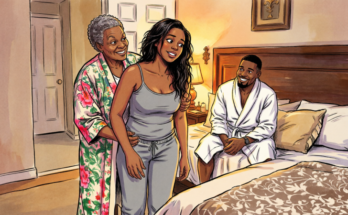
The night my father called me a bad investment, my twin sister was already smiling.
He sat at the coffee table with Madison Parker’s acceptance letter to Redwood Heights in one hand and mine to Cascade State in the other, like he was comparing numbers instead of daughters.
“We’re paying for Redwood,” he said. “Full tuition. Housing. Everything.”
Madison gasped. My mother started talking about dorm decor before he was even finished.
Then he slid my letter across the table.
“We’re not funding Cascade,” he said. “Your sister has potential. You don’t. Redwood is worth the investment.”
I stared at the envelope. “So what am I supposed to do?”
My father folded his hands. “Figure it out. You’ve always been independent.”
That was it. No apology. No softness. Just a verdict dropped in the middle of our Portland living room while I sat there holding the future he had already decided wasn’t worth paying for.
That night I opened the old laptop Madison had handed down to me and searched: full scholarships for independent students.
Three months later, I dragged two suitcases into a sagging rental house near Cascade State and started building a life no one had offered me. My room barely fit a mattress and a desk. At 4:30 every morning, I woke up for a coffee-shop shift. Then classes. Then studying. Then weekend cleaning jobs.
I learned how long instant ramen and pride can keep you standing.
Thanksgiving came. Campus emptied out. I called home anyway.
“Can I talk to Dad?” I asked.
I heard his voice in the background before my mother came back on the line.
“He’s busy.”
Later that night, Madison posted a holiday photo. Candlelight. White dishes. My parents smiling beside her at the table.
Three place settings.
That should have broken me. Instead, it sharpened me.
Second semester, I nearly passed out during a morning shift. Two days later, my economics professor handed back our papers. Mine had an A+ in red ink and one line underneath it: Stay after class.
I thought I was in trouble.
Professor Nathan Holloway waited until the room emptied, tapped my paper, and said, “This isn’t the work of someone average. Who told you to think small?”
I laughed once. “My family.”
So I told him about the jobs, the rent, the four hours of sleep, and the sentence my father used when he cut me loose.
Not worth the investment.
Professor Holloway pulled a thick folder from his desk drawer.
“Sterling Scholars,” he said. “Twenty students in the country. Full tuition. Living stipend.”
I pushed it back. “That’s not for people like me.”
He pushed it right back. “That’s exactly who it’s for.”
So I wrote before dawn shifts. I revised at midnight. I practiced interview answers on the bus. I fainted once at the cafe. I had $36 left after rent one week.
I still made finalist.
Then I won.
I opened the email on a bench between classes with my hands shaking. But the part that emptied the air from my lungs was the attachment.
Sterling Scholars could transfer to partner universities for their final academic year.
Redwood Heights was on the list.
The same campus my father had decided I didn’t deserve.
Professor Holloway told me transfer students entered the honors track. Strong candidates were often chosen to give the commencement address.
I filled out the paperwork and told no one at home.
Redwood Heights looked exactly like Madison’s photos: gray stone buildings, clipped lawns, expensive coats, students walking around like success had been waiting for them since birth.
Then Madison found me in the library.
She stopped dead with an iced coffee in her hand. “How are you here?”
“I transferred.”
“Mom and Dad didn’t say anything.”
“They don’t know.”
Her eyes dropped to the books in my arms. “How are you paying for this?”
“Scholarship.”
That was all it took.
My phone started vibrating before I made it back to my dorm. Missed calls from my mother. Texts from Madison. One from my father: Call me.
I answered the next morning while crossing the quad.
“Your sister says you’re at Redwood,” my father said.
“Yes.”
“You transferred without telling us.”
Students in hoodies moved around me on their way to class.
“I didn’t think you’d care,” I said.
A pause.
“Of course I care. You’re my daughter.”
The words landed strangely after years of silence.
“Am I?” I asked. “Because I remember you telling me I wasn’t worth investing in.”
He went quiet.
Then, finally: “How are you paying for Redwood?”
“Sterling Scholars.”
Another pause.
“That’s extremely competitive.”
“Yes.”
Then he said the part that told me everything.
“Your mother and I will be at graduation for Madison anyway. We should talk then.”
For Madison.
Not for me.
By spring, my days were rehearsals, honors meetings, and silence. My parents filled Madison’s graduation posts with pride.
They still had no idea.
Graduation morning came bright and warm. Families packed the Redwood Heights stadium with balloons, cameras, and bouquets wrapped in crackling cellophane.
I entered through the faculty gate in a black gown with a gold honors sash across my shoulders and the Sterling medallion cool against my chest.
From the honor section near the front, I spotted them immediately.
Front row. Center seats.
My father had his camera out before the ceremony started. My mother held a bouquet of white roses. Madison was a few rows back with her friends, laughing and fixing her cap.
They looked so certain.
The music started. Faculty crossed the stage. Names blurred in the sun. My heart kept punching harder against my ribs.
Then the university president stepped to the podium with a card in his hand.
My father lifted his camera toward Madison’s section.
My mother leaned forward with the roses.
And the president said, “Please welcome this year’s valedictorian…”
My father did not raise his voice when he decided I was worth less than my twin sister. That was what made it so hard to forget. If he had shouted, if he had slammed a hand against the coffee table or thrown my acceptance letter into my lap with some burst of anger he could later blame on stress, maybe I could have filed it away as one terrible family argument. But he was calm. He was almost gentle. He spoke the way he spoke to contractors and bank officers, steady and practical, as if he were discussing roof repairs or insurance premiums instead of the future of his daughter sitting across from him with both hands clenched around a college envelope she had carried home like a miracle.
“We’re paying for Redwood Heights,” he said, looking at Madison Parker first. “Full tuition, housing, meals, all of it.”
My twin sister gasped and covered her mouth, though even then some part of me knew she had expected it. My mother cried out softly, already smiling, already reaching for Madison, already slipping into the joy of having something beautiful to plan. Dorm colors. Campus tours. Move-in weekend. Sweatshirts with the university crest. My father’s face opened in that rare way it did when he was proud and wanted everyone in the room to see it.
Then he turned to me.
“Emily,” he said, “we’ve decided not to fund Cascade State.”
For a second, the words did not arrange themselves into meaning. They floated there in the summer air of our Portland living room, absurd and weightless. Cascade State was not Redwood Heights, but it was a good school. A respected public university with a strong economics program, solid faculty, and the kind of practical affordability my father claimed to admire. I had worked for that acceptance. I had stayed up late, studied quietly, kept my grades high, helped around the house, and applied without making a scene. I had not asked for a private university. I had not asked for prestige. I had asked, without saying it out loud, to be given the same beginning.
“I don’t understand,” I said.
My father leaned back in his chair and folded his hands together. Daniel Parker was a man who believed every decision could be justified if he sounded reasonable enough. He owned a small commercial flooring company in Portland, Oregon, and had spent my entire life teaching us that money followed discipline, that success followed choices, that emotion was what people used when facts did not favor them.
“Your sister has exceptional networking skills,” he said. “Redwood Heights is the right environment for her. She knows how to connect with people. That school will maximize her potential.”
Madison stood near the fireplace, still holding her letter, one shoulder angled toward the mirror as if she could not help checking herself in every reflective surface. We had the same green eyes, the same dark blond hair, the same birthday down to the minute. But somehow life had always dressed us in different lighting. Madison’s confidence filled every room before she entered it. Mine waited near the doorway and asked permission.
“And me?” I asked.
My mother looked down at her lap.
My father hesitated only long enough to make me hope.
“You’re intelligent,” he said. “No one is denying that. But you don’t stand out in the same way. We don’t see the same long-term return.”
Return.
That was the word that cut deepest. Not because it was cruel, though it was. Because it was honest. To him, this was not punishment. It was evaluation. Madison was an investment. I was an expense.
“So I just figure it out myself?” I asked.
He gave a small shrug, the kind of shrug men use when they have already decided the pain of a situation belongs to someone else.
“You’ve always been independent.”
Madison’s phone buzzed. She glanced down and smiled, already texting someone, already carrying the news into the world. My mother began saying something about financial responsibility and timing, but I stopped hearing her clearly. The living room blurred at the edges. The family photos on the mantel seemed suddenly staged by strangers: Madison and me in matching dresses at six, Madison in front, me slightly behind; Madison blowing out candles at ten while I clapped beside her; Madison in her new car at sixteen, red ribbon stretched across the hood, me standing at the edge of the driveway holding the old tablet my father had given me because “it still worked fine.”
All those moments had existed separately before that night. Little things. Small disappointments. Explainable imbalances. Madison needed more attention. Madison was more social. Madison was sensitive. Madison had opportunities. Madison had potential. I was easygoing. I understood. I would be fine.
But sitting there with my college letter folded in my hands, I saw the pattern as one long, unbroken road.
I had not imagined it.
I had simply learned not to name it.