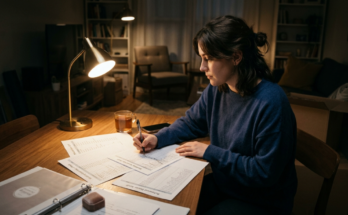
I lifted my daughter’s sleeve… and my entire world shattered in seconds.
I’d only been gone six days. Six days of airports, client dinners, hotel elevators, and pretending my marriage wasn’t slowly falling apart. By the time I finally made it back home, all I wanted was to hold my little girl and hear her laugh again.
But the moment I stepped through the front door, I knew something was wrong.
“Daddy?”
Her voice was so quiet it barely sounded like her.
She stood near the hallway in oversized long sleeves despite the brutal July heat, her tiny shoulders tense, her eyes cautious in a way no seven-year-old’s eyes should ever be.
I dropped my suitcase instantly and pulled her into my arms.
She flinched.
Not playfully.
Not because she was surprised.
Instinctively.
My heart nearly stopped.
I pulled back fast. “Sweetheart… did I hurt you?”
Her eyes widened with panic.
“No,” she whispered too quickly. “I’m okay.”
That was when I noticed the sleeves pulled all the way over her hands.
“Emma,” I said softly, kneeling in front of her, “can Daddy see your arm?”
She froze completely.
Then slowly… trembling… she pushed the fabric upward.
And I forgot how to breathe.
Bruises.
Dark fingerprints wrapped around her forearm. Old yellow marks underneath fresh purple ones. A thin cut near her wrist that looked days old.
Not accidents.
Not playground bruises.
Handprints.
Before I could even process what I was seeing, a voice sliced through the hallway.
“What exactly are you doing?”
I turned and saw my wife standing in the kitchen doorway holding a glass of wine.
Sophia.
Calm. Perfectly composed. Smiling.
That smile chilled me more than rage ever could.
“She’s clumsy,” she said casually. “Always has been.”
Emma immediately grabbed my shirt with both hands.
I felt her shaking.
Then she whispered six words that destroyed something inside me forever.
“Daddy… please don’t make her angry.”
Everything in me broke.
That night, after Emma finally fell asleep curled against my side, I searched the house.
Quietly.
Carefully.
I didn’t even fully know what I was looking for.
Maybe proof.
Maybe reassurance that I was imagining things.
Instead, I found hell.
Inside Emma’s backpack was a tiny digital recorder wrapped in one of her socks.
I recognized it immediately.
Months earlier, I’d bought it for her so she could listen to bedtime stories in my voice whenever I traveled for work.
Instead, my daughter had been using it to survive.
The first recording lasted less than a minute.
Sophia screaming.
Emma sobbing.
A loud crash.
Then my daughter’s terrified little voice:
“I’m sorry, Mommy… please…”
A slap echoed through the speaker hard enough to distort the audio.
My knees nearly gave out beneath me.
I listened to seven recordings.
Every single one was worse.
Threats.
Screaming.
Locked doors.
Crying.
Punishments over spilled juice, unfinished homework, toys left on the floor.
And through all of it, my daughter begging to be forgiven for existing.
I didn’t sleep that night.
At 5:07 a.m., I called the police.
Sophia laughed when officers arrived.
Actually laughed.
“This is insane,” she snapped. “He’s trying to turn my daughter against me because our marriage is struggling.”
But her confidence started crumbling the second the recordings played out loud in our living room.
Emma sat beside me gripping my hand so tightly her nails dug into my skin.
One officer muttered under his breath,
“Jesus Christ…”
Child Protective Services arrived that afternoon.
A child psychologist named Dr. Bennett interviewed Emma privately for almost two hours.
When she finally stepped out of the bedroom, her eyes were red.
“You caught this just in time,” she whispered quietly. “Another few months and the emotional damage could have become permanent.”
I remember grabbing the hallway wall because suddenly I couldn’t feel my legs anymore.
Sophia was removed from the apartment that evening.
But the nightmare was far from over.
The custody hearings started three days later.
Sophia arrived dressed in soft colors with tearful eyes and a perfect voice trembling at exactly the right moments.
Her attorney painted me as an absent husband obsessed with work.
“He’s barely home,” the lawyer argued smoothly. “Mrs. Bennett was overwhelmed raising a child alone.”
And for one terrifying moment, I realized people were listening.
Then Emma testified through closed-circuit video.
I will never forget hearing her tiny voice echo through that courtroom.
“She says Daddy leaves because he doesn’t love us,” Emma whispered while clutching a stuffed rabbit. “And when Mommy gets mad, she squeezes really hard.”
The courtroom went dead silent.
Then Emma rolled up her sleeve again for the judge.
Sophia started crying immediately behind her attorney table.
Fake tears.
I knew the difference now.
Emergency custody was granted to me before sunset.
But winning custody didn’t magically heal my daughter.
For months, she woke up screaming from nightmares.
If I dropped something in the kitchen, she’d cover her head instinctively.
Once, during a work call, I raised my voice at a client without thinking—and Emma immediately curled into herself like she expected to be hit.
That destroyed me.
So I changed everything.
I stopped traveling.
Turned down a promotion.
Started taking her to school myself every morning.
We built routines together.
Movie nights.
Saturday pancakes.
Sunday walks for ice cream.
Little by little, my daughter began learning what safety felt like.
One evening, about four months later, she fell asleep beside me on the couch while cartoons played softly in the background.
For the first time in over a year…
She didn’t flinch once in her sleep.
That was the moment I finally broke down crying.
Not in court.
Not after the recordings.
Not even after seeing the bruises.
But there, holding my peacefully sleeping little girl, I realized something unbearable:
Children don’t just need parents who love them.
They need parents who notice when something is wrong.
Almost everyone failed Emma.
Teachers accepted excuses.
Neighbors ignored screaming.
Family members called Sophia “strict.”
Meanwhile my daughter kept leaving tiny signs everywhere, praying somebody would finally see them.
The sleeves.
The silence.
The fear hidden behind her eyes.
And the worst part?
She had already started believing nobody would protect her.
Nobody except me.
A year later, Emma stood onstage at her school play dressed like a sunflower, bright yellow petals framing her smiling face.
I sat in the front row holding flowers.
The second she spotted me in the audience, her entire face lit up.
Not cautious.
Not afraid.
Safe.
And in that moment, I understood something I never truly had before:
Saving someone doesn’t always look dramatic.
Sometimes it’s simply believing a terrified little girl when the world keeps telling her to stay quiet.